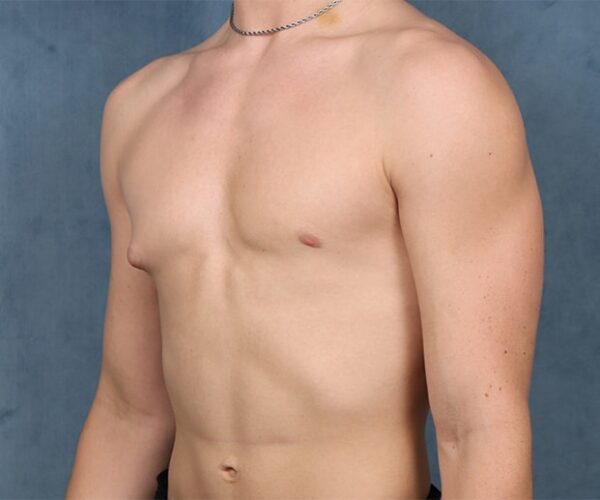
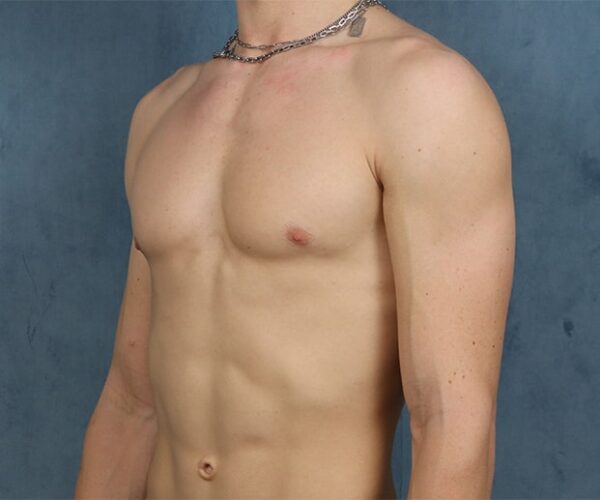
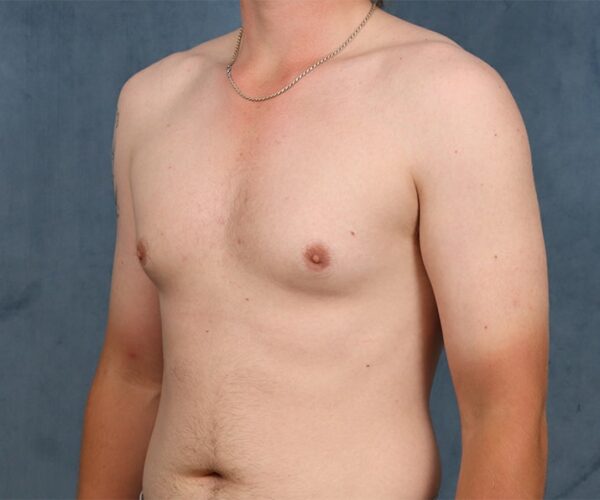
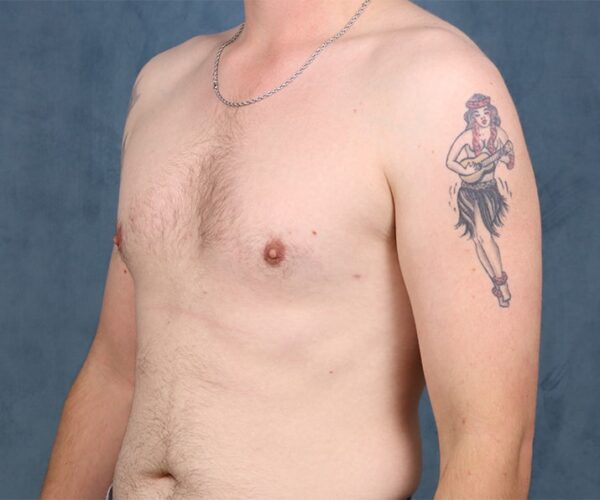
Gynecomastia surgery is commonly referred to by many names, including:
- Gyneco
- Gyno
- Male Breast Reduction
- “Man Boobs Treatment”
Male breast development, or fullness in the chest, is also known as gynecomastia. This is a condition that affects many men and can be quite bothersome. Male breast development can be due to hormonal imbalance, weight gain, or genetics. About 30-40% of teenage boys develop some breast development around the time of puberty—called “pubertal gynecomastia”—which usually resolves after one to two years. When it has been there more than two years after puberty, it is medically referred to as gynecomastia. Male athletes that may have used anabolic steroids are also more predisposed to developing gynecomastia.
There are a number of factors that may lead to the development of gynecomastia, and the condition is actually quite common. Fortunately, our board-certified plastic surgeon, James F. Boynton, MD, offers advanced male breast reduction procedures that can effectively address gynecomastia with successful results. Male breast reduction techniques can reduce excess fat and/or glandular tissue (“gland”) that is causing an enlarged breast appearance, ultimately giving the chest a flatter appearance and helping men feel more confident about the way they look.
Dr. James F. Boynton – Gynecomastia Surgerical Options
Dr. Boynton offers some of the latest advances in gynecomastia surgery techniques for patient experiencing excess fat and/or excess glandular tissue (“gland”) in the chest, as well as those who are suffering from a condition known as lipodystrophy of the chest (when a man feels “breasty” or “chesty” in certain shirts), and patients who are considering gynecomastia revision surgery. These include power-assisted lipo-contouring with gland excision through a mini-incision, treatment for excess fat in the chest after weight loss, a chest lift with free nipple grafting, and other state-of-the-art options.
Dr. Boynton has been successfully performing gynecomastia surgery for many years and sees numerous gynecomastia patients each year. He is committed to helping patients achieve effective results and minimal scarring.


In addition to this detailed page on gynecomastia treatment, our practice offers a sister website containing a comprehensive array of information regarding male breast reduction and advanced gynecomastia surgery procedures available from Dr. Boynton. Please click the link below to explore our site exclusively devoted to information about gynecomastia and associated treatment options at our practice.
Gynecomastia surgery is commonly referred to by many names, including:
In cases of true gynecomastia, where glandular tissue is the primary cause of enlarged breast tissue, even extreme working out will not fully eradicate this condition. Typically, the most effective way to significantly address true gynecomastia for a majority of patients is with male breast reduction surgery, which can remove the excess tissue (and fat, if a combination of the two conditions is present) and improve the appearance of the chest.
Gynecomastia can vary widely in its severity. For some men, the condition may be limited to a small amount of tissue directly beneath the nipple, while others may experience significant enlargement and sagging that alters the entire chest contour. To help evaluate the extent of gynecomastia and determine the most appropriate treatment, the condition is often categorized into “grades.” These grades are based on the amount of tissue present, the degree of breast enlargement, and the impact on chest shape.
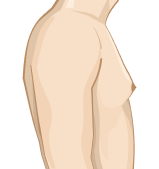
Grade 1 gynecomastia is characterized by a small amount of tissue localized around the areola (the darker skin surrounding the nipple). This can cause a slightly puffy appearance, often referred to as “puffy nipples,” but does not usually extend beyond the chest’s natural contour. In many cases, surgical correction involves mini-incision removal of glandular tissue (“gland”) and/or targeted liposuction to smooth the chest.
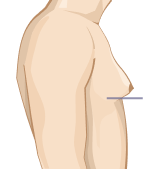
With Grade 2 gynecomastia, more breast tissue is present, leading to noticeable enlargement that extends beyond the areola but does not yet cause significant skin sagging. The chest may appear rounder or fuller, especially in fitted clothing or when shirtless. Treatment typically requires lipo-contouring with power-assisted lipo-sculpting techniques in combination with direct gland excision in a precise way to restore flatter, more defined chest contours.
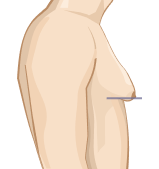
At Grade 3, breast enlargement is more pronounced, and patients often experience mild to moderate skin laxity. The chest may take on a more feminine appearance, with excess tissue affecting both the nipple-areolar complex and the surrounding chest wall. Surgical treatment often requires removal of glandular and fatty tissues and advanced chest wall shaping techniques to get the flattest, best male chest possible.

Grade 4 gynecomastia is the most severe form, where there is substantial tissue overgrowth and significant sagging of the chest skin. In these cases, the chest may resemble female breasts, and the nipples may sit below the natural crease of the chest. Correction typically involves more advanced techniques, such as skin excision/“chest lift” and repositioning of the nipple-areolar complex (often with a free nipple graft), to create a flatter, natural-looking chest contour.
Understanding the grade of gynecomastia is important because it helps guide the surgical plan. A patient with mild puffiness may benefit from a small procedure that results in barely detectable scars, while someone with severe enlargement and chest laxity may need a more comprehensive approach to the male chest. By identifying the grade and tailoring the technique to the individual, Dr. Boynton can help ensure patients achieve results that look natural, balanced, and in harmony with their overall physique.
Dr. Boynton is experienced with many of the latest surgical techniques for gynecomastia, including:
Dr. Boynton utilizes a specialized technique to remove the tissue causing gynecomastia and reshape the chest area, restoring its masculine form. This treatment for gynecomastia involves two 2 mm “puncture” incisions. The chest wall and armpit area are lipo-contoured and sculpted using special cannulas designed for more “fibrous” tissue, as is typical in the male chest. After lipo-contouring is completed throughout the chest and armpit area, a component of the procedure is performed to actually remove the fibrous breast tissue from underneath the areola and nipple complex.
Sometimes male patients feel they have “puffy” nipples, and the male breast reduction procedure eradicates and flattens the chest in essentially a “scar-free” way. The surgery is typically performed on an outpatient basis and avoids the large, open incisions and scars—including free nipple grafting scars—that are typical of the traditional techniques. Most patients notice significant flattening of the chest as well as a “shrinkage” of the often-dilated size of the areola.
Sometimes, men are concerned with the nipples showing through shirts due to large or over-projecting nipples. These cases, in addition to “puffy” nipples, can be corrected in a simple, in-office procedure that can be performed under local anesthesia in approximately 20-30 minutes.
The chest lift with free nipple grafting technique is another commonly performed option for patients who have lost large amounts of weight and have excess fat in the chest. Free nipple grafting allows Dr. Boynton to place incisions around the areolas and in areas that should yield less conspicuous scarring when compared with techniques such as anchor lift gynecomastia surgery. The free nipple grafting method can be ideal for patients with particularly severe gynecomastia after major weight loss, helping to address the condition successfully while dramatically reducing the potential for prominent scars.
Lipodystrophy of the chest occurs when fat accumulates unevenly, creating visible contour irregularities, asymmetry, or localized fullness. This condition can result from prior surgery, hormonal changes, or fluctuations in weight. Treatment typically involves precision liposuction techniques to remove excess fat and sculpt a more balanced, natural chest contour. Dr. Boynton takes a meticulous approach, carefully refining the area to restore smoothness and symmetry while maintaining a natural appearance. Depending on the extent of correction needed, treatment can often be performed as an outpatient procedure with minimal downtime, helping patients achieve a more defined and confident look.
Some men may experience unsatisfactory results after an initial gynecomastia procedure from another surgeon, including issues such as crater deformities, asymmetry, residual gland or fat, or irregular chest contours. Gynecomastia revision or corrective surgery is designed to address these challenges and restore a smooth, natural chest appearance. Dr. Boynton evaluates the underlying cause of the problem and customizes the surgical approach accordingly. Techniques may include targeted liposuction, precise gland excision, or skin contouring, depending on the specific correction needed. By carefully refining the chest, revision surgery can correct irregularities, improve symmetry, and enhance overall definition. The goal is to achieve results that not only look natural but also help patients feel confident in their appearance, whether in clothing or shirtless, providing both functional and aesthetic improvement after a prior procedure.
Teenagers up to middle-aged men enjoy the improvements they can obtain from gynecomastia surgery, as well as their improved appearance both in and out of clothing. If you are suffering from gynecomastia, please don’t hesitate to reach out to our practice to learn more about your options.
Special compression vests are utilized along with post-lymphatic massage therapy while recovering from gynecomastia surgery. Patients generally need only a day off of work and can typically resume full working out and exercise in two weeks. Final results usually take up to six months to see; however, significant effects of the surgery should be noticeable not long after the procedure. You can find more information about what to expect during recovery from male breast reduction surgery in the frequently asked questions section below, and we encourage you to contact us with any additional questions you may have. Dr. Boynton and his medical team will also provide you with detailed information about post-operative recovery and instructions that can help you heal as safely and quickly as possible.
“Very professional staff and process was seamless from initial consultation through aftercare. Best in Houston for male chest and worth the investment for high quality results and care. I’d recommend any man with chest concerns to see Dr. Boynton for an honest evaluation and very meticulous treatment plan.”
Since Dr. Boynton uses a special surgical technique for most gynecomastia surgeries, many patients experience less noticeable scarring when compared to more traditional techniques. The scars from gynecomastia surgery should be quite small and challenging for others to see as the incisions are typically placed in locations that are inconspicuous. Dr. Boynton will talk more with you about what you can expect in terms of scarring from the male breast reduction procedure and the steps we take to minimize the visibility of residual scars.
The cost of male breast reduction to treat gynecomastia at our practice typically falls in the $8,000-$9,000 range; however, since the treatment is customized, the price varies based on each individual patient’s needs, the techniques utilized, and other factors. If the patient is undergoing revision gynecomastia treatment, the cost could be more, depending on the technique necessary for successful revision surgery. During the initial consultation, a member of our team will produce a total cost estimate based on your custom treatment plan and go over it with you. Our practice accepts a number of convenient payment methods, and we work with CareCredit®, which offers qualified applicants a variety of plastic surgery financing options that can help make the treatment as affordable as possible.
About 60 percent of the results are seen after the first month, 80 percent after three months, and final results are typically seen at six months.
Historically, liposuction alone does not achieve flat results in the male chest, and some component of excision needs to be performed to remove the fibrous gynecomastia tissue (typically located behind the areola/nipple complex) that causes many male patients to have “puffy” nipples. The tissue is removed in “strips” using specialized surgical instruments that enable it to be removed without having to utilize a traditional “crescent” or “half-moon” shaped incision that goes around the bottom half of the areola.
Pain is typically mild to moderate. The procedure is done as an outpatient treatment, and most patients are able to resume their activities of daily living (such as showering, going out to dinner, getting around, etc.) the following day. Most patients will take one or two days off of work at most. A small minority of patients will take a week off of work, but that is rarely necessary. Men bruise more substantially than women do in general, so the bruising is to be expected. Men often want to get back in the gym and work out, but that is something that needs to wait at least two weeks.
Massaging is an important adjunct to chest wall sculpting and gynecomastia treatment. All patients get variable degrees of scar tissue formation after the procedure, and formal post-lymphatic treatments and massages are very important. With some patients, we start this process one week after the procedure; with others, we wait until two weeks following treatment.
Men wear a “compression vest” that fits easily and inconspicuously under their clothes. The material is breathable and comfortable, and patients are able to do this in all seasons. Sometimes, we add a special foam inside of the garments to achieve targeting compression in specific areas. Many male patients decide to do their abdomen and “love handles” at the same time as the chest, and the garment is the same regardless, so that is something they enjoy.
Chest liposuction areas typically do not drain as much as the abdomen and love handle areas, but there is a possibility of some mild drainage in the first two days. The specialized garment is designed to wick away fluid and helps in this regard.
Typically two weeks after the surgery. Dr. Boynton will provide more specific recommendations for you once you have been examined at the initial consultation.
If you are considering treatment for gynecomastia, Dr. Boynton can help. Please contact our practice to schedule a confidential consultation with Dr. Boynton, and he will be happy to answer your questions and discuss all aspects of this procedure with you. If you are also interested in other plastic surgery options for men, our practice can provide you with more information on treatments that may be right for your goals.